Scientists Use Light to Reveal the Hidden Workings of Superconductors

A study of particles trapped inside tiny magnetic vortices offers a new way to understand materials used in powerful magnets
Scientists at Rutgers and in Estonia have used invisible light to look into tiny magnetic whirlpools, called vortices, inside a superconductor, revealing details that could help researchers develop better materials for carrying electricity.
Their study, published in Physical Review Letters, distinguishes two groups of particles trapped within those vortices, and measures properties that conventional techniques couldn’t readily separate.
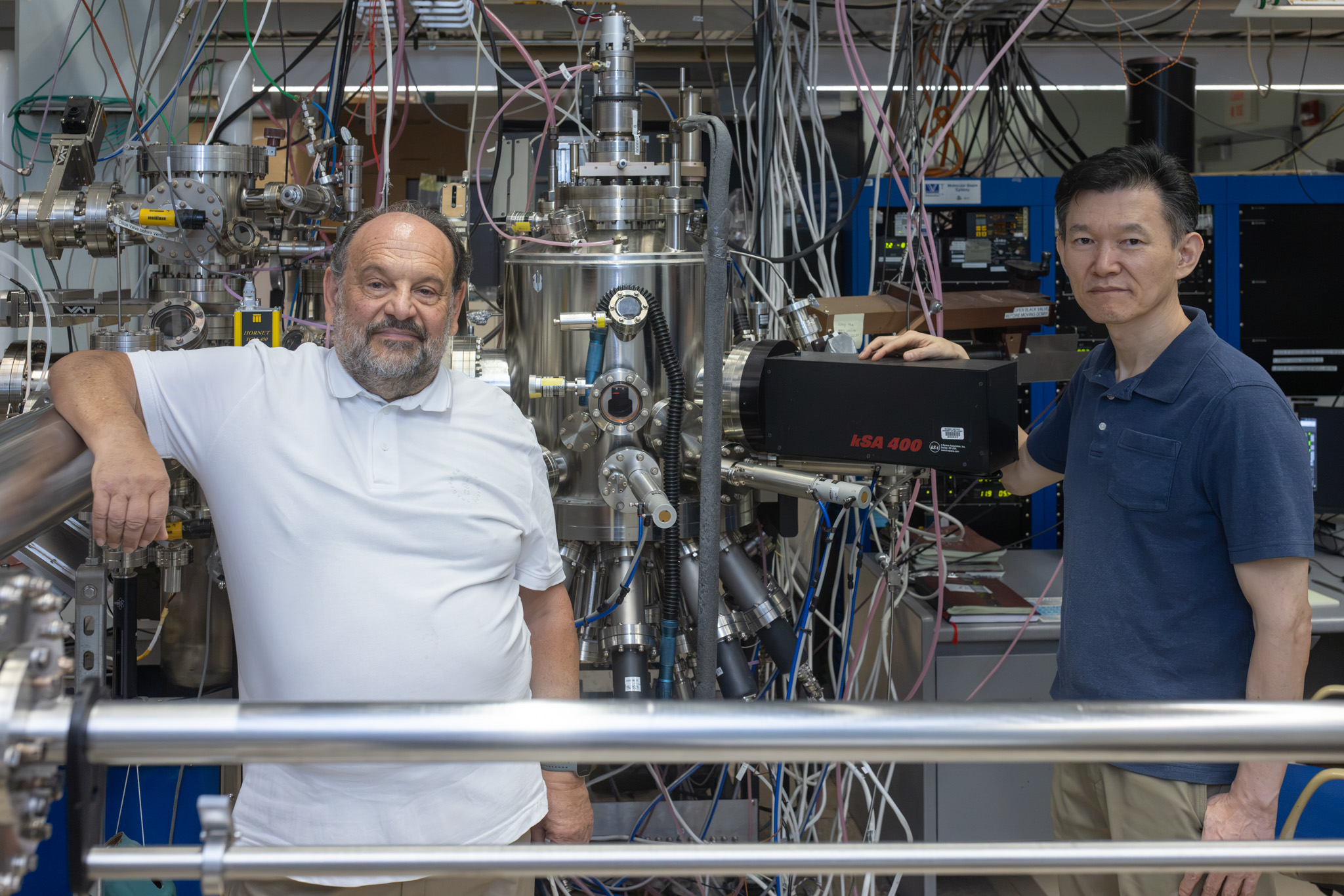
“To improve superconductors, scientists need to understand what vortices contain and how they behave,” said Girsh Blumberg, a Distinguished Professor in the Department of Physics and Astronomy in the Rutgers School of Arts and Sciences and a co-author of the study. “This study provides a new way to look inside them.”
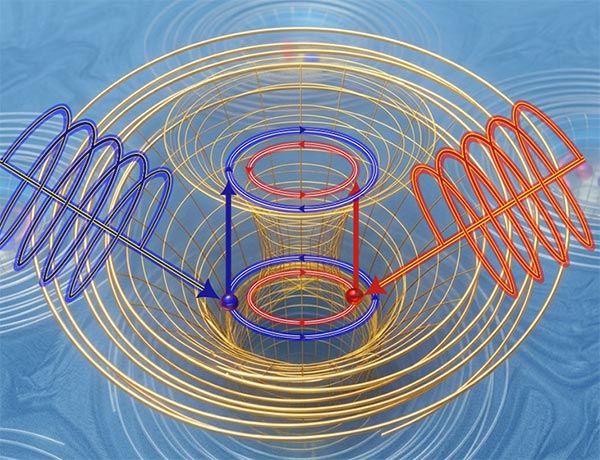
Each vortex consists of circulating electrical current around a narrow core where superconductivity is weakened. The surrounding material remains superconducting.
Superconductors can carry electricity without losing energy as heat and are used to create powerful magnets in MRI scanners and particle accelerators. But magnetic fields can produce tiny vortices inside many superconductors. When these vortices move, they cause energy losses. Understanding their contents and behavior could help scientists develop materials that perform more reliably in strong magnetic fields.

“It’s like Swiss cheese, with many holes,” Blumberg said.
The “holes” in this comparison are vortices. Particles confined within them follow the rules of quantum physics, which govern matter at extremely small scales.
In 1964, physicists predicted these trapped particles would occupy separate energy levels. The levels resemble the rungs of a ladder. A particle can move from one allowed level to another by absorbing the right amount of energy.
Earlier experiments had detected these states. Blumberg and his colleagues wanted to learn more about transitions between them and distinguish the contributions of different groups of particles.
Finding suitable material was essential. In many conventional superconductors, the energy levels are packed so closely together that their signals blur. The iron-based superconductors the team chose has narrow vortex cores, which help keep the levels far enough apart to distinguish.
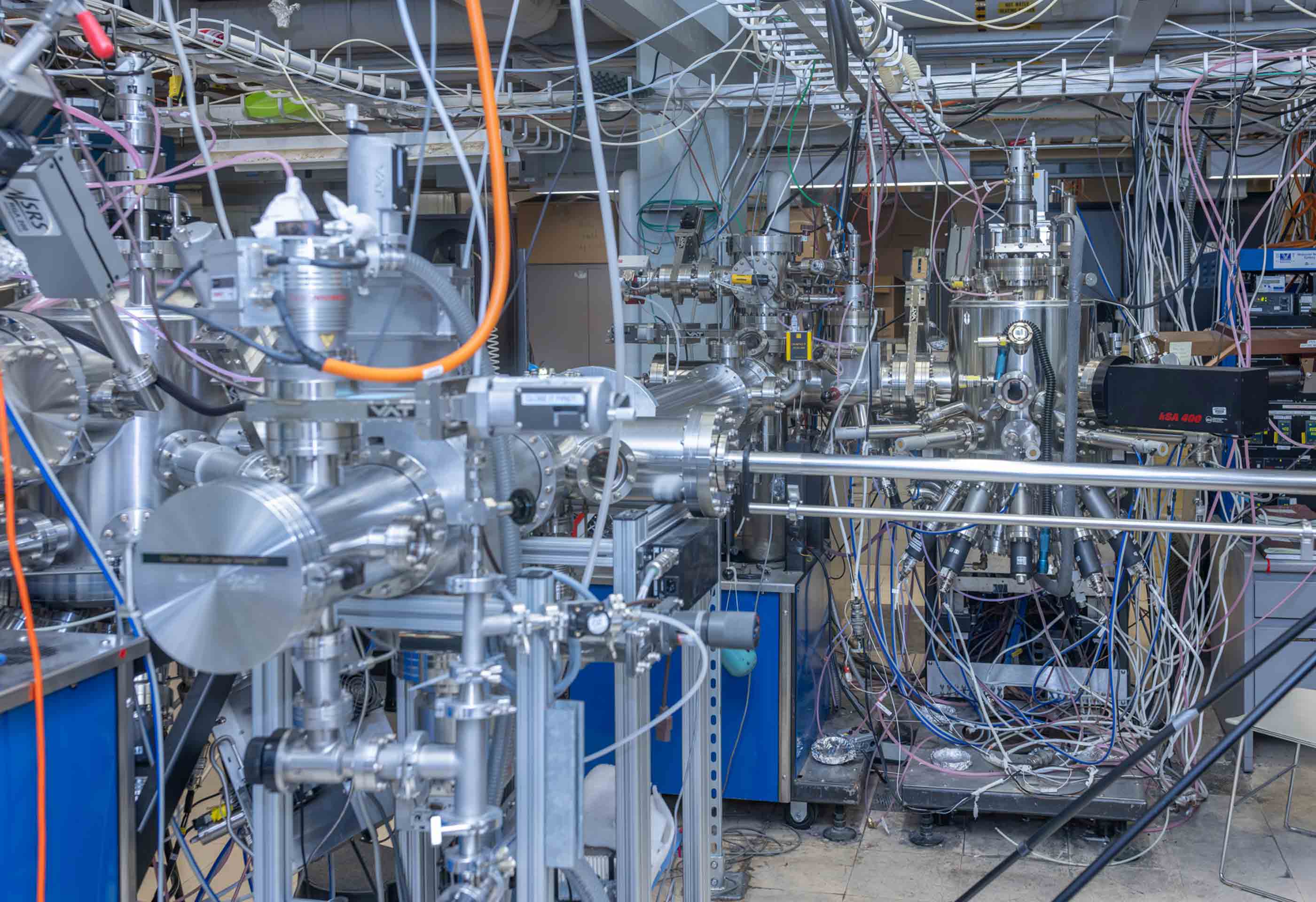
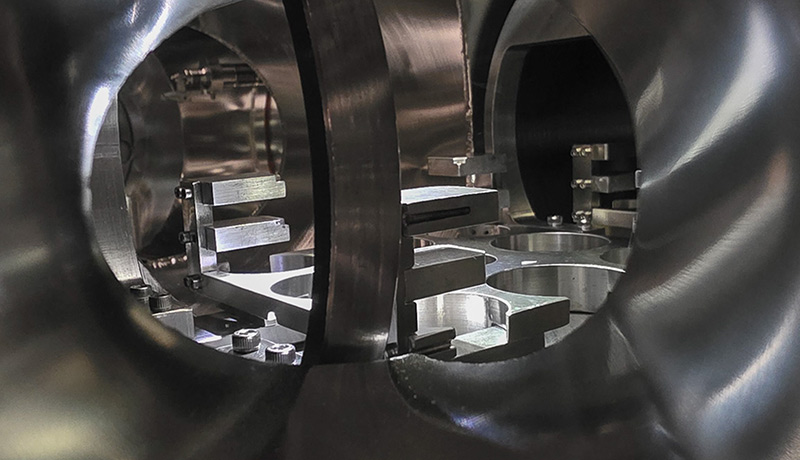
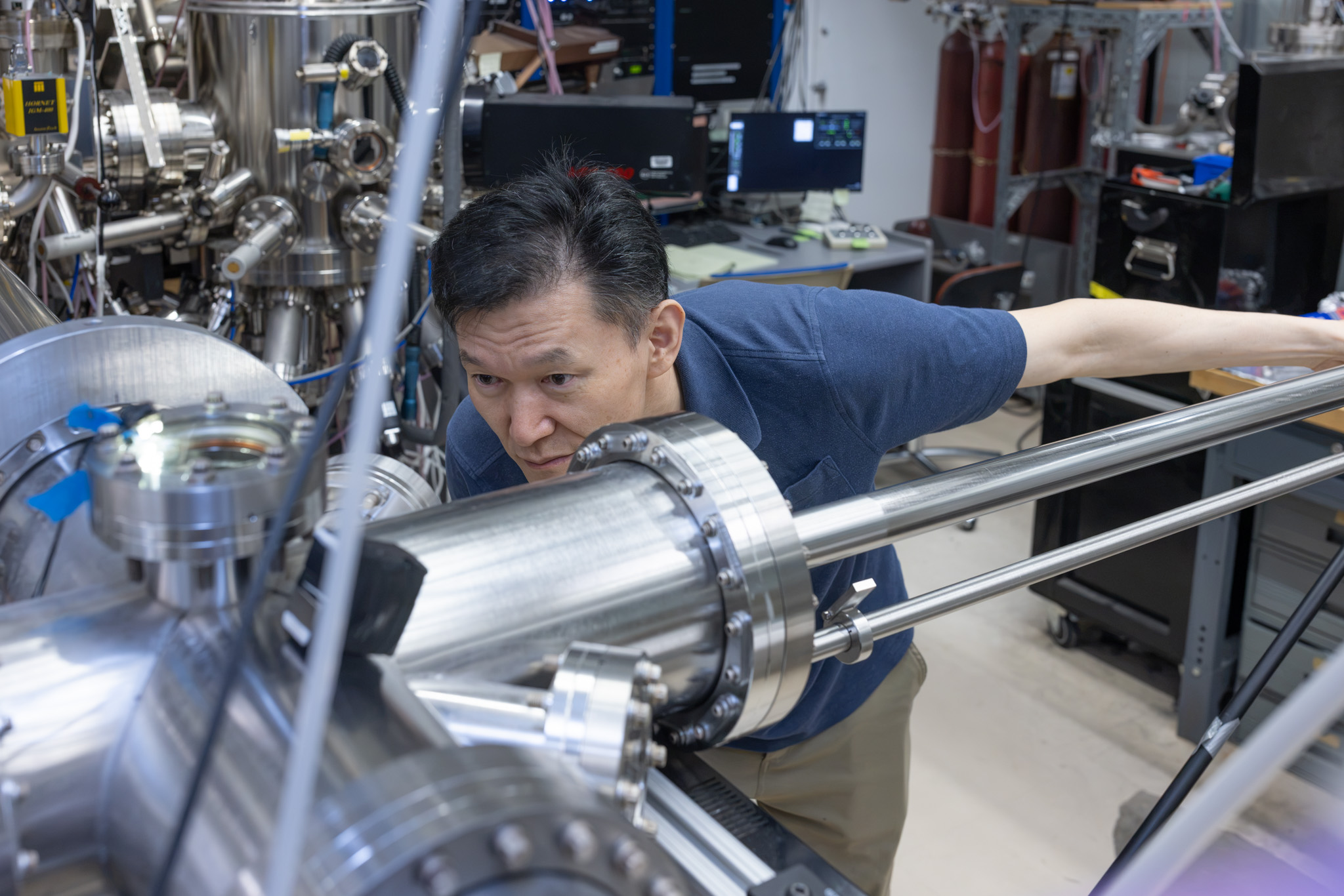
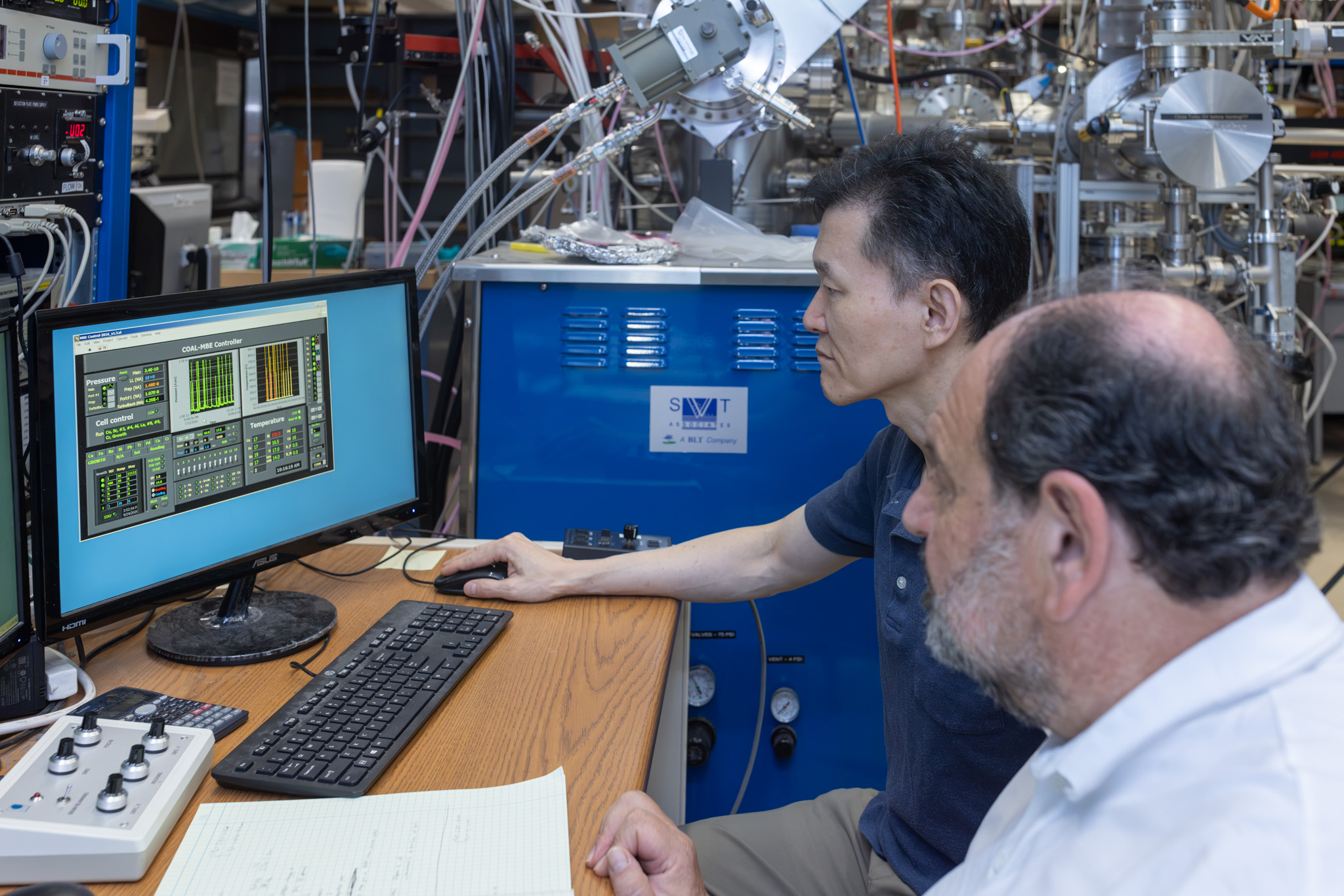
The experiment depended on thin superconducting films prepared by the Rutgers team, which included researchers Seongshik Oh, a professor in the Department of Physics and Astronomy, and Hee Taek Yi, a postdoctoral research associate. Made by controlled atomic layer-by-layer deposition of iron, tellurium and selenium, each superconducting film was 40 nanometers thick, or roughly thousand times thinner than a human hair. A nanometer is one-billionth of a meter.

“We need extremely clean films, thin and clean films, to do that experiment,” Blumberg said.
Imperfections can interfere with the particles’ behavior and obscure their signals. The films also had to be thin enough for the researchers to measure light passing through them.
The light measurements took place at the National Institute of Chemical Physics and Biophysics in Tallinn, Estonia. Researchers cooled the samples and exposed them to powerful magnetic fields. Both samples became superconducting at about minus 438 degrees Fahrenheit.

The team passed terahertz radiation, a form of invisible light, through the films and measured changes in the light’s polarization, or the orientation of its electric field.
Light waves can vibrate in a pattern that turns clockwise or counterclockwise. One group of particles responded to left-handed light pattern, while the other group responded to the opposite, right-handed, pattern. That difference allowed the researchers to tell the two groups apart and study each one separately.
“By looking for these transitions with light of different handedness, you can separate them,” Blumberg said.
Using their light measurements and mathematical calculations, the researchers estimated the size of the vortices and how long the particles’ responses to light lasted. They also estimated how strongly the vortices resist changes in speed or direction and how strong a magnetic field would disrupt superconductivity for each group of particles.

Members of the team compared two versions of the material containing different amounts of selenium. Both began carrying electricity without resistance at almost the same temperature. But changing the recipe changed the mix of particles trapped inside the vortices.
In one sample, the calculations suggested there were nearly four particles of one group for every particle of the other. In the second, the two groups were about equal in number. Changing the recipe also changed how much energy the particles needed to jump between levels and how quickly their responses to the light faded.
The comparison shows how materials with similar superconducting temperatures can have substantially different internal properties. The technique gives scientists a way to examine those differences as they change a material’s composition.
The authors said the approach could be used to investigate other superconductors with sufficiently narrow vortex cores, expanding the tools available to researchers developing new materials.
“The technique is especially useful because it can separate the contributions of two different groups of particles,” Blumberg said. “Earlier methods could detect the trapped states but could not reveal this difference as directly.”
The international research collaboration was supported by the National Science Foundation and by the European Research Council.
Explore more of the ways Rutgers research is shaping the future.