Senior Maps Where Sewer Overflows Are on the Lower Passaic River
Rutgers student Sara Kuzhikandathil spent part of her summer in an externship co-hosted by the National Geographic Society and The Nature Conservancy
Never mind the summer internships. Sara Kuzhikandathil was all about landing an externship.

The Rutgers University-New Brunswick senior – who attends the School of Environmental and Biological Sciences, where she majors in environmental planning and minors in environmental policy, institutions and behavior – found the very one she was hoping to secure. Kuzhikandathil was offered an externship (a short-term, experiential learning opportunity) co-hosted by the National Geographic Society, the nonprofit research arm of the media and scientific brand behind the magazine and television network, and The Nature Conservancy, an environmental nonprofit.
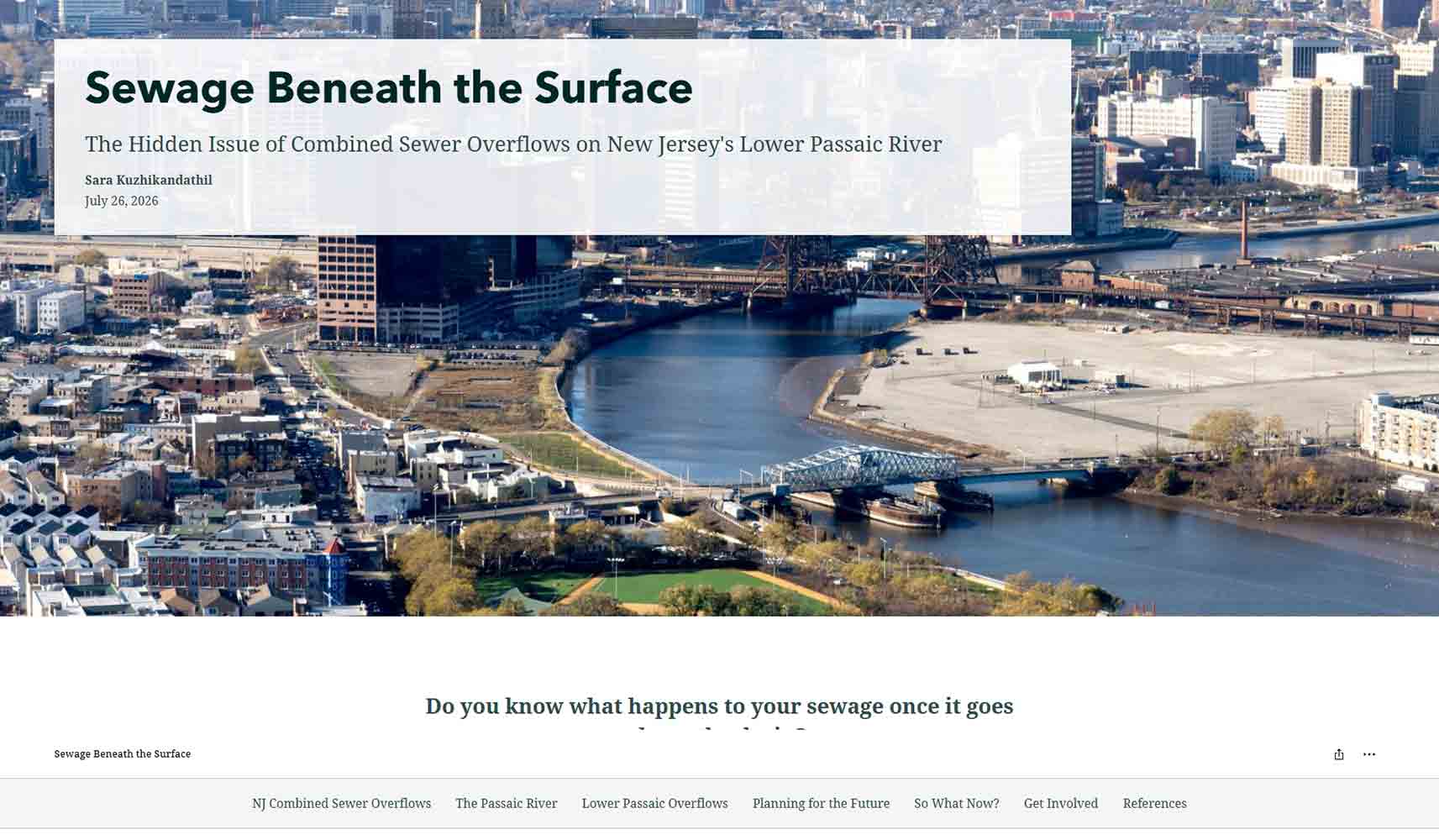
Under the program, young adults ages 18 to 25 take part in an eight-week virtual learning and leadership experience. During her externship from June to the end of July, Kuzhikandathil developed an ArcGIS StoryMap, a web-based, content-creation and communication tool that allows users to share maps, applications and multimedia in the context of a narrative. Titled “Sewage Beneath the Surface,” the interactive map tracks combined sewer overflows along New Jersey’s Lower Passaic River.
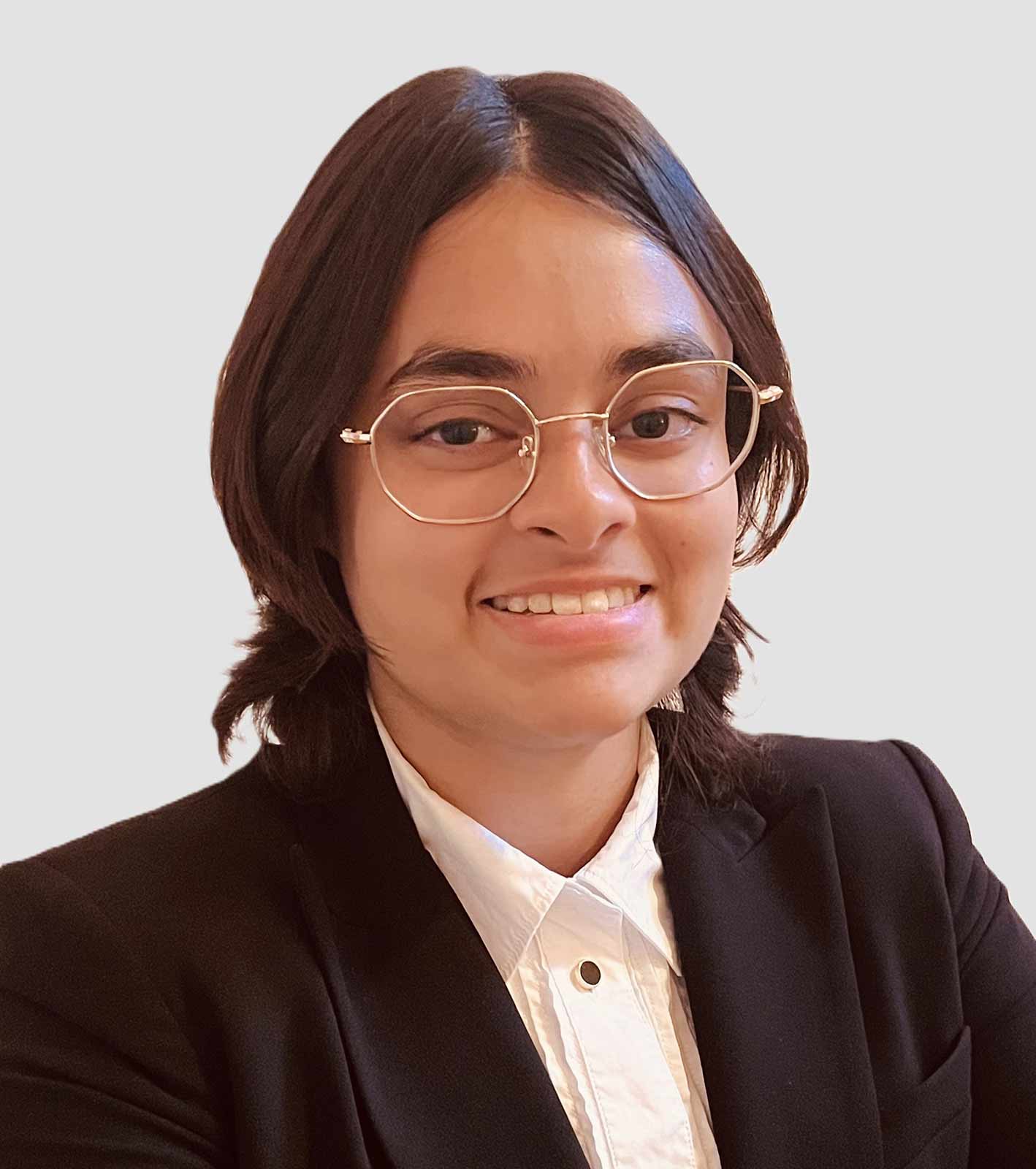
Kuzhikandathil, 23, of Chester, N.J., who transferred to Rutgers from the University of California, Santa Barbara, discusses her externship and her research.
What brought you to Rutgers?
I started at UC Santa Barbara in environmental studies. A lot of the classes I took there were focused on different ways of seeing and thinking about environmental issues. This was great for developing a broad, theoretical understanding of the environment, and helped me realize that I wanted to learn more about the practical applications of environmental knowledge and how we can actively address these issues.
Rutgers offered the opportunity to get that practical education and hands-on experience working on these issues and serving affected communities.

What is sewer overflow and why is it an issue?
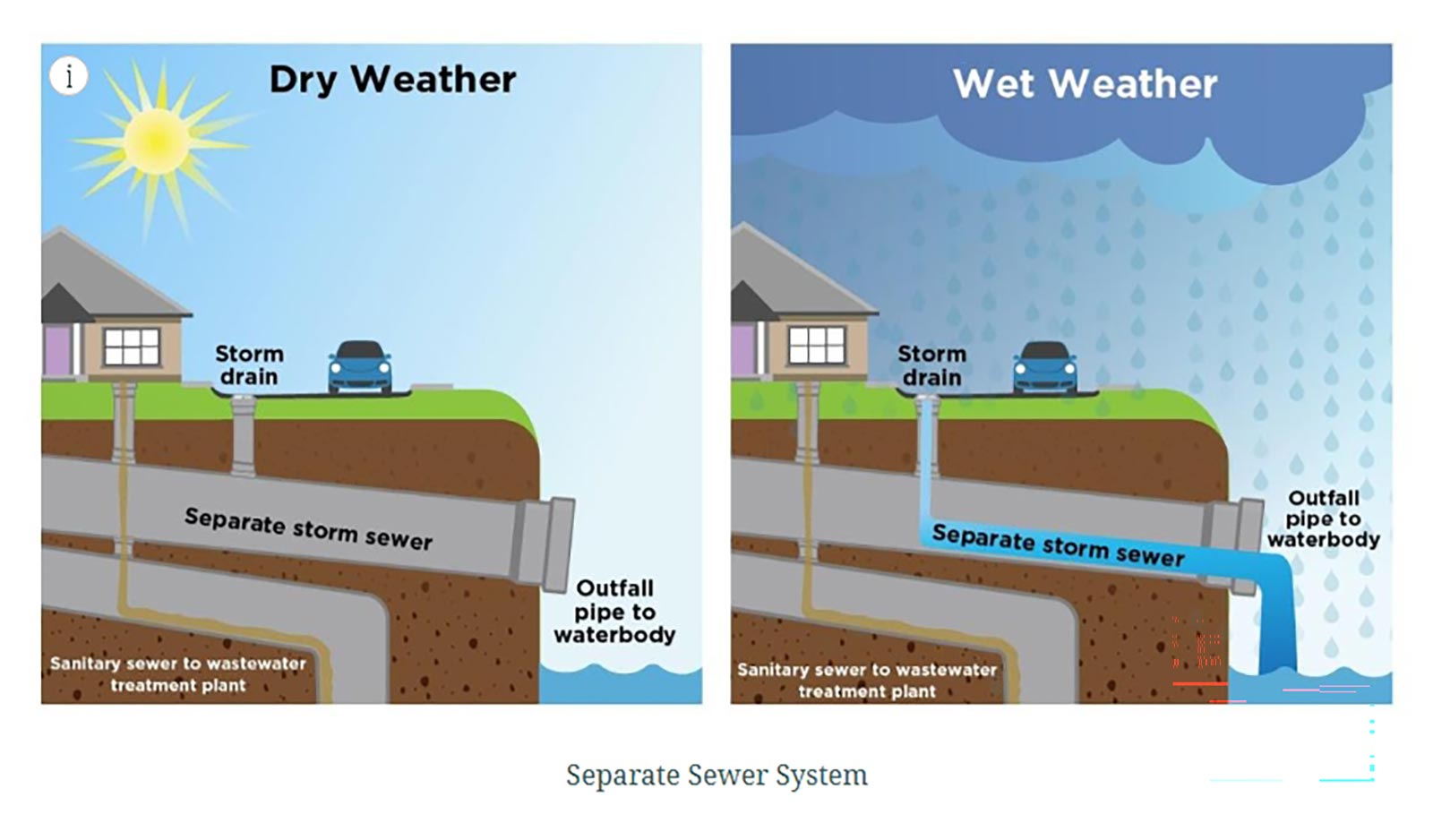
There are two major types of sewer systems in New Jersey. The one that is more common and modern features two pipes. One pipe carries the wastewater from homes and buildings to the sewage treatment plant, while the other pipe carries runoff from storm drains to local waterways.
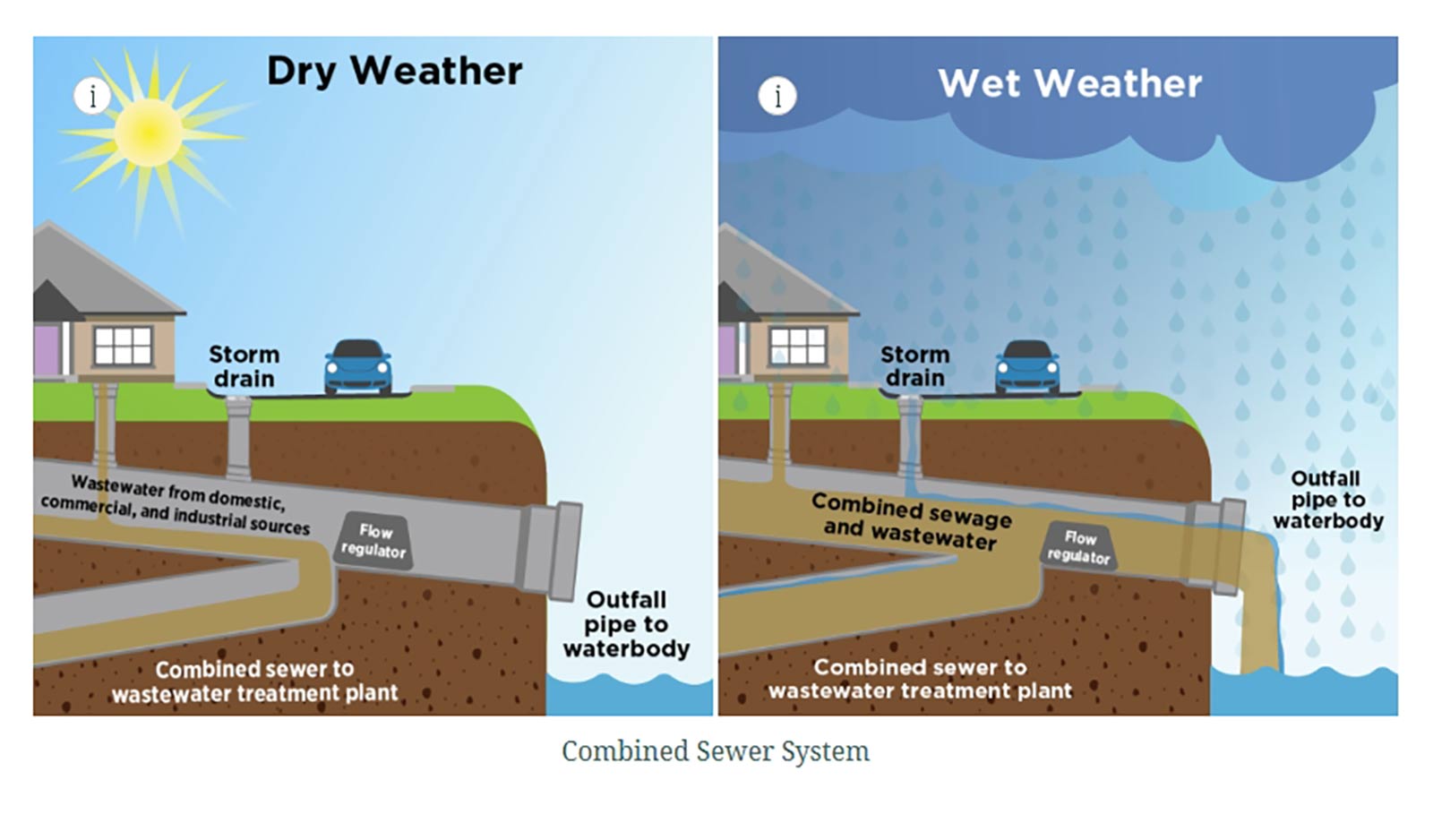
But some cities in New Jersey have an older system called a combined sewer system where there’s only one pipe. It takes both the water from the storm drains on the streets and the sewage from your house and combines that wastewater in a single pipe that transports all that material to the sewage treatment plant.
If you have a lot of rainwater flowing into the system, the combined amount of wastewater in a single pipe can overwhelm the treatment plant’s capacity. When this happens, the system risks wastewater backing up into people’s homes and streets. To prevent this, combined sewer systems are designed with outfalls that release excess, untreated wastewater into local waterbodies. This means in communities with combined sewer systems, raw sewage is flowing into local waterways every time there’s heavy rainfall. This raw sewage can carry not only fecal matter, pathogens, plastics, and pharmaceuticals, but also heavy metals and industrial chemicals that industries in the sewer system have washed down the drain.
This is a far-reaching issue in that it intersects with a lot of other issues New Jersey is currently facing. As I found in my research, the communities burdened by combined sewer systems are disproportionately non-white, economically vulnerable, and tend to also be dealing with a history of redlining. The trend of urban development in our state exacerbates the issue, since asphalt doesn’t let rainwater percolate into the soil, forcing the majority of runoff into the sewer system. Plus, rainfall in New Jersey is predicted to increase under climate change. We’re also dealing with rising sea levels, which can hamper the effectiveness of outfalls near or on the coast, like those on the Lower Passaic. There have already been instances where outfalls have become submerged, causing wastewater to flood homes and streets.

Explain the topic of your externship research.
My environmental planning courses at Rutgers had touched on combined sewer systems, so the issue had been at the back of my mind. However, I didn’t really have an in-depth understanding of the issue, and I noticed many people I talked to about it were not familiar with the issue at all. When this externship offered the opportunity to research an environmental issue of my choosing, I decided to look more into these sewer systems.
My first questions were very broad. “What’s going on? How bad is this issue exactly? What’s the frequency of overflow events? How much sewage is spilling into our local waterways across New Jersey?”
As I started to do my research, I realized there is a serious lack of data and accessible information on this issue.
Considering the lack of data and public awareness, I decided to condense my research project. I knew the project had to be feasible within the externship’s eight-week window, and I also knew I wanted to generate a product that would be accessible and useful for the public, and specifically the communities impacted by sewer overflows.
I ultimately took a more targeted approach and started with the very basics of what the issue is to get people familiar with it. I synthesized the data that were available and clarified the cities’ newly published overflow mitigation plans to make the existing information more publicly accessible. My goals for my StoryMap were twofold: I wanted to raise awareness of the issue, and then if someone wanted to take public action on it and go to their local municipal government or politicians, they could bring the data up and use it to support their claims and advocacy.

How did you learn about the externship?
It’s posted on both the National Geographic and The Nature Conservancy websites.
I’ve always loved the National Geographic Society. I love the photographs. I love the magazines. This summer they didn’t have any internships that they were hosting themselves, but I found this instead.
When I got accepted to this externship, I was over the moon. It was such a great opportunity – especially because it’s a global externship, so you get to meet people from all different countries and learn about all different environmental issues and different countries’ and cultures’ approaches to these issues.