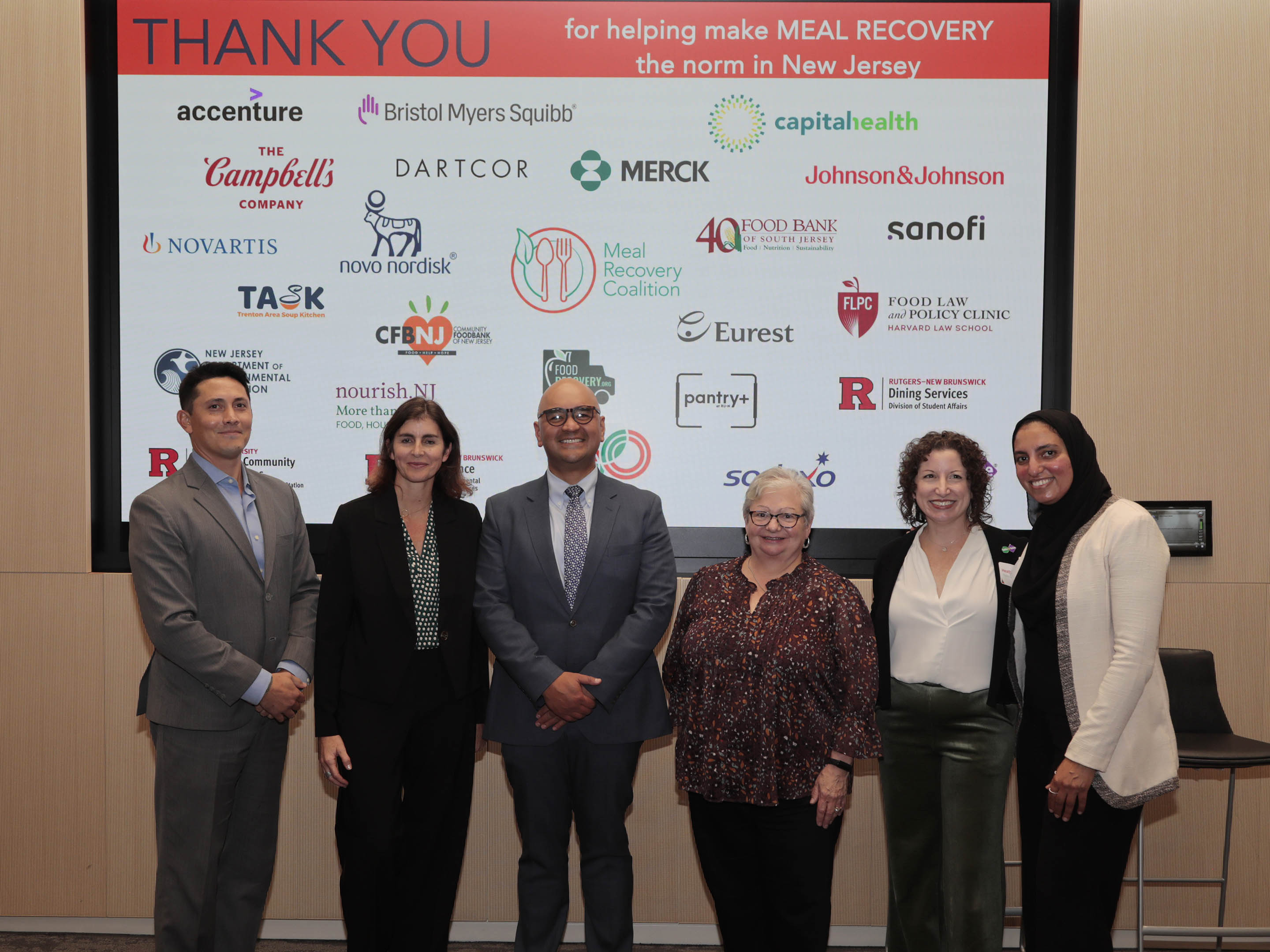
Rutgers Cooperative Extension Leads Drafting of New Jersey’s First-Ever Food Donation Guidelines

A statewide collaborative effort aims to keep billions of pounds of food from landfills while helping to fight food insecurity
Can a bakery donate two-day-old bread? Can a grocery store give away a sandwich that was made yesterday? How long after the “best by” date can you donate a can of beans?
Every year, the average New Jerseyan discards roughly 325 pounds of edible food – millions of potential meals left to rot in landfills due in part to confusion over what can, and cannot, be safely and legally given away.
New recommendations, co-authored by members of the Rutgers Cooperative Extension, aim to remove the mystery from the food donation process to get more wholesome, healthy nutrition to the people who need it most.
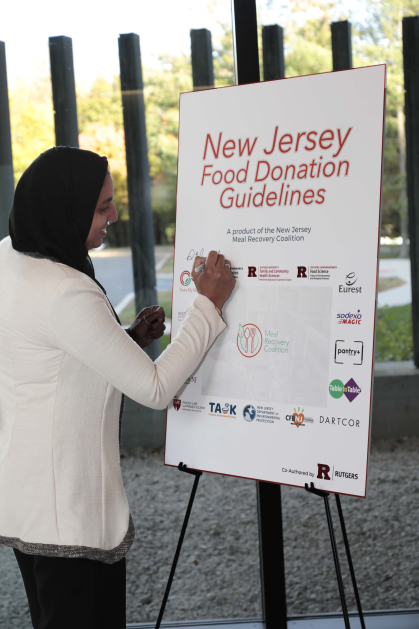
The New Jersey Food Donation Guidelines, published online in the fall, were drafted by Rutgers and the Meal Recovery Coalition, a business-driven, statewide meal recovery initiative tackling both food insecurity and the environmental impact of food waste, to remove long-standing ambiguity about what food can be gifted. The goal is simple: Reduce waste, feed more people and give communities, businesses and households the clarity they have long lacked.
“We want to ensure that food is used for the purpose it was grown or produced for,” said Sara Elnakib, chair of the Department of Family and Community Health Sciences at Rutgers Cooperative Extension and a lead author of the document. Wasting safe, edible food in a state where nearly 12% of the population is food insecure is both illogical and unethical, she said.
Elnakib’s vision may sound straightforward but turning it into practice meant navigating a dizzying maze of legal and bureaucratic obstacles. The effort dates to July 2017, when state lawmakers passed the Food Waste Reduction Act, which set an ambitious goal to cut New Jersey’s annual generation of municipal food waste in half by 2030.
Work on the guidelines began in earnest early this year and was funded by a grant from the New Jersey Department of Environmental Protection.
One longstanding barrier to food donations has been uncertainty. In the absence of guidance, many restaurants, grocery stores, suppliers and individuals opted for the bin over the food bank, Elnakib said.
Another concern was liability. Many donors may want to help but worry that food spoilage could become cause for negligence. The guidelines address this head on. If donations are made in “good faith” and through a certified “food recovery organization,” there is no liability for the donor.
Navigating approvals from municipal and county health inspectors posed additional challenges.
To clear these impediments, Rutgers Cooperative Extension partnered with Share My Meals, the lead agency behind the Meal Recovery Coalition. With support from more than a dozen other organizations, they reviewed best practices from states such as Washington and Texas and engaged experts from leading national institutions such as Harvard University’s Food Law and Policy Clinic.
Importantly, the guidelines are detailed enough for large donors, like a company cafeteria, and general enough for a lone Good Samaritan.
“Our main goal was to align state and local standards and ensure that everyone across the food system – whether you're a donor, a transport organization or a distributor – has the same baseline understanding about what food can be safely given away,” Elnakib said.
New Jersey’s complex local governance – more than 500 municipalities, each with its own food inspection protocols – made that consistency vital. The guidelines spell out safe donation practices, expectations for food storage and handling, record-keeping to ensure traceability and clear definitions of what is acceptable to donate.
A step-by-step flowchart makes food donation assessments simple. Damaged or distressed food can never be given away. Canned items can almost always be. Foods that require control of time and or temperature to prevent bacteria growth – dairy, meat, baked goods and prepared meals, for instance – can be safely shared if they were stored properly
Timing for this effort is crucial. The U.S. Environmental Protection Agency estimates that 58% of emissions of landfill methane – a potent greenhouse gas – is derived from rotting food, and the state has just five years to reach its municipal food waste reduction goal.

With clearer rules, Elnakib said, more donors may feel comfortable participating. “You need to have people who are willing to donate the food as well as people who are going to accept the food.”
Elnakib said that in the coming months, Rutgers Cooperative Extension will partner with the State Department of Health to train municipal food safety inspectors on the new standards – a step expected to further expand safe meal recovery.
In the end, these guidelines are more than 18 pages of well-intended advice, said Elnakib. Rather, she said, they represent a coordinated effort to ensure that New Jersey’s surplus food feeds its people, not its landfills.